Sentinel: A Fine Art Journey Through the Richtersveld
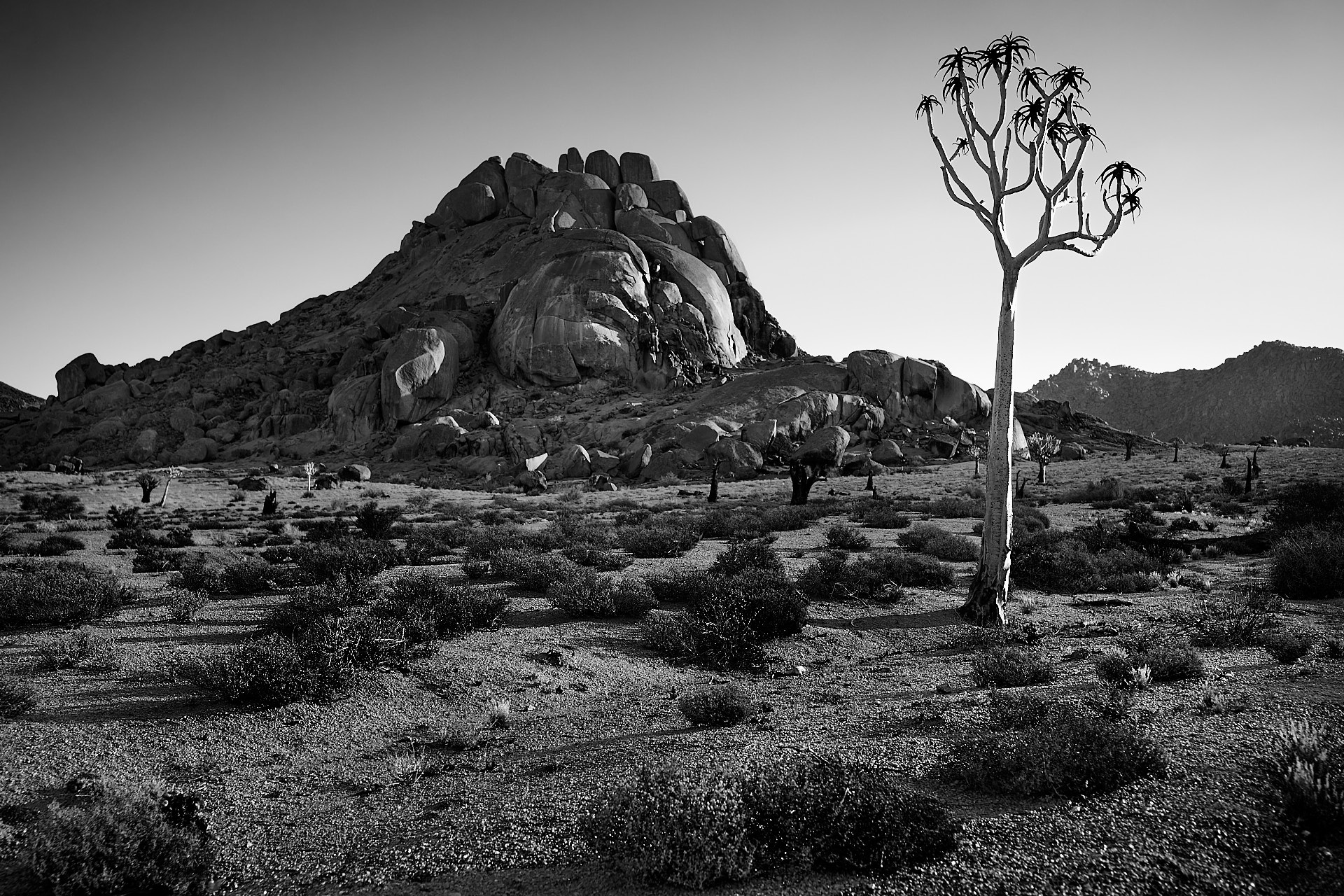
I'd been searching for days, driving through landscapes so ancient and raw they felt like another planet entirely, when suddenly I rounded a cluster of massive boulders—ancient granite giants that looked like they'd been carelessly tossed by gods—and there it stood. One tree. Alone. Its thick, peeling trunk reaching upward, those distinctive spiky branches creating sharp silhouettes against the bleached sky.
In that moment, I understood what I'd been seeking: a portrait of resilience itself.
What struck me wasn't just the tree's isolation—it was its absolute refusal to apologise for it. While everything else sought what little shade the boulders offered, this tree stood exposed, fully committed to its position. These boulders only emphasised its vulnerability, yet somehow they felt like witnesses rather than protectors. Like they were honouring this tree's choice to be exactly where it was.
Filled with excitement and anticipation, I returned the remote otherworldly place that had captivated my imagination and intrigue the previous day.
The sun had not yet crested the horizon when I arrived. My timing was perfect. There it was—a solitary quiver tree rising from the fractured earth like an ancient guardian. The air already shimmered with heat as the rays of light started to graze the stones and scrub in front of me, the massive granite boulders standing quietly behind this lone sentinel glowed in the sharp early desert light. he ancient granite formations reveal textures invisible in harsh midday sun.
This is how "Sentinel" was born—not just as a photograph, but as a testimony to survival in one of Earth's most unforgiving landscapes. I've learned that the harshest environment sometimes reveals the hardest truths.
The Richtersveld: Where Photography Becomes Poetry
The Richtersveld in the Northern Cape represents both a photographer's ultimate challenge and greatest reward. This UNESCO World Heritage Site stretches across a harsh moonscape where summer temperatures regularly exceed 50°C, yet it harbours an ecosystem of remarkable beauty and tenacity. For those willing to brave the elements, this remote corner of South Africa offers photographic opportunities that simply don't exist anywhere else on the planet.
Creating fine art photography here demands more than technical skill—it requires understanding the land's brutal honesty. The Richtersveld strips away pretence. There are no comfortable compositions handed to you on a platter. Every image must be earned through patience, perseverance, and respect for an environment that tolerates no mistakes.
Beyond Documentation: Creating Art
What separates fine art photography from mere documentation in the Richtersveld is intention. Anyone can capture a quiver tree. Creating "Sentinel" required waiting for light conditions that emphasised the tree's isolation, choosing an angle that showcased both its vulnerability and strength against those imposing boulders.
Fine art photography here means seeing beyond the obvious. It's finding the interplay between life and geology, between endurance and entropy. It's understanding that these landscapes tell stories millions of years old, and your role as a photographer is to translate that narrative into a single frozen moment.
The Reward
The Richtersveld humbles you, challenges you, and ultimately transforms how you see. Each photograph becomes a collaboration between photographer and place, a document of not just what exists, but what it means to persist against all odds. "Sentinel" stands as my tribute to that lesson—a reminder that true art often emerges from the most inhospitable places.
I got the shot I came for. But the truth is, I'm not sure I captured what that tree really is. How do you photograph resilience? How do you frame the weight of time and heat and isolation in a single click?
I had a million questions going through my head, the kind that make a good photograph and suddenly I realised that what I had captured was much more than I expected.
I call it "Sentinel" because that's what it felt like—a guardian of something essential. A reminder that beauty doesn't always come easy or soft. Sometimes it comes scorched and solitary, standing watch over stones that remember when the earth was young.