ABOUT

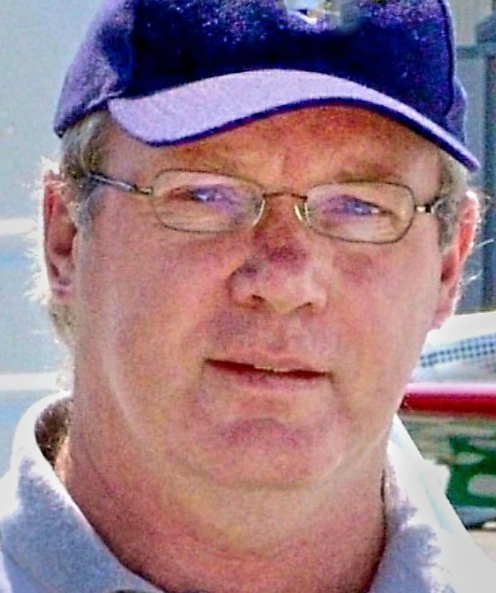
Peter Dooley


NATURE ADDICT, PASSIONATE PHOTOGRAPHER


Bio - Peter Dooley


Peter Dooley, a contemporary master of black and white photography, captures the beauty of unspoiled African landscapes, evoking profound emotions of tranquility and introspection. His work is awe-inspiring and transcends the limitations of the medium.


One striking aspect of Peter's work is his masterful control over tonal range and degrees of luminosity that have become his signature style.


Peter’s work has been showcased at notable exhibitions and fairs including The Interior Design Trade Fair, '100 Percent Design' exhibition, Art of Print Gallery and the opening of Gallery Afrique ‘Think Outside’ 2025 Exhibition. His awe-inspiring works sold at all three of these shows.


One of Peter’s works was selected to be featured in an online Invitational Exhibition, ‘The Healing Power of Color’ presented by Manhattan Arts International, New York City, NY.


With buyers from South Africa, the UK, and the USA, his art has garnered international acclaim.


Inspired as a child by his late father's photography legacy, Peter's career blossomed into success in 2002 with a magazine cover feature that sealed his fate in photography.  Peter’s passion for photography has always remained strong.


His Mother, a Professor of Ikenobo, instilled in him a profound understanding of composition and balance rooted in the philosophy of Japanese Art. This philosophy, emphasising simplicity, elegance, and reverence for nature, is profoundly evident in his work.


Despite a lucrative commercial phase that led to many magazine covers and fashion features, Peter found true fulfilment in nature, seeking solace and inspiration to narrate Africa's essence away from the trauma and chaos of the world.


"Peter’s art is visual poetry that elevates us to a peaceful realm.” wrote Renee Phillips, Director of Manhattan Arts International, NYC, NY


What people say about Peter's artwork


Dennis Da Silva,


Dennis Da Silva, a world renowned Black and White printer, has been in the Photographic Industry for the past 50 years. He had this to say at the opening of Gallery Afrique


“Peter is a very technical photographer and his deep knowledge of photography shows in all of his work”


Art Review


Peter’s art is visual poetry


"Peter Dooley is a contemporary master in black and white photography. His portfolio known as “Allure of Africa” is awe-inspiring and transcendent. His reverence for the beauty that exists in the natural world emanates from his images..


Peter’s art is visual poetry that elevates us to a peaceful realm. We bask in the glow of his myriad tones and degrees of luminosity that provide a treasure trove of harmonious modulations and contrasts. His images are meditative, bringing a healing modality to the viewer."


Renee Phillips, Director and Curator, Manhattan Arts International, New York, NY


"Your images are calming, thought provoking and serene.


You seem to have an uncanny ability to look through the haze and trauma afflicting

the world to a more pristine view of what an unspoiled environment looks like,

a view humanity has forgotten about or maybe never experienced.


You're an ambassador for environmental change in the face of our climate crisis.


Thank you for sharing these thought provoking views of the world that really gets the

viewers attention and hopefully will lead to a sustainable change, before it's too late."


Robin Mortarotti


Owner, Mortarotti - Ramirez Productions,

Oakland, California,

United States


" Peter Dooley's Mastery of Black and White Landscape Photography


In a world teeming with vibrant colours, Peter Dooley stands as a master of capturing the ethereal beauty of landscapes through the lens of black and white photography. With a keen eye for composition and a deep understanding of light and shadows, Peter transports viewers into a realm where monochrome becomes a gateway to a heightened sense of emotion and tranquillity.


Peter's photographs possess a remarkable ability to evoke a sense of timelessness, allowing viewers to see the natural world through a different lens. His choice to work exclusively in black and white strips away the distractions of colour, focusing attention solely on the raw elements of nature. Peter's artistry shines within this minimalist palette.

Composition plays a pivotal role in Peter's work. Each frame is meticulously crafted, showcasing a careful balance of elements and an impeccable sense of scale. From sweeping vistas to intimate details, Peter's photographs guide the viewer's gaze with precision. There is a harmonious interplay between light and dark, as shadows dance across the landscap.es, emphasizing the textures and contours of the natural world.


One striking aspect of Peter's black and white landscapes is his masterful control over tonal range. The grayscale spectrum he employs is rich and nuanced, revealing remarkable depth in every image. From the stark contrast of a rugged mountain peak against a brooding sky to the subtle gradations of mist cascading through magical African plains, Peter's photographs captivate the eye and invite contemplation.


Beyond technical prowess, Peter's photographs possess an undeniable emotional resonance. Each frame exudes a mood—a quiet stillness, a sense of awe, or a contemplative melancholy. It is through the absence of colour that he draws out the emotional essence of the landscapes, allowing viewers to connect on a deeper level. One cannot help but feel a sense of reverence for the majesty and grandeur of nature as portrayed through Peter's lens.


Peter Dooley's mastery of black and white landscape photography is an artistic feat that transcends the limitations of the medium. Through his meticulous composition, expert handling of tonal range, and profound emotional resonance, Peter transports viewers into a realm where nature's beauty is distilled into its purest form. With each photograph, he captures not only the visual splendour but also the intangible spirit that resides within the landscapes. Peter Dooley's black and white landscapes are a testament to the enduring power of monochrome photography and a testament to his exceptional talent as a photographer "


Tammy Marshall, Art of Print, South Africa


Artist Statement


I see my work as a tribute to the natural world, an examination of the conspicuous, the beautiful, and the flawed.


I aim to create distinctive works showcasing peaceful nature scenes to bring tranquility into our busy world.

In the field, I use natural light and shadows to spark curiosity, capturing and sharing moments that inspire visual imagination and provoke thought.


I challenge the fragmented mindset and culture of sustainability complacency by revealing the gap between humanity and an idealised image of pristine

nature to inspire change. I delve into the essence of objects, going beyond the obvious to engage deeply with nature and infuse its meditative power into my work.


In my monochrome work, I utilise black and white shades to accentuate timeless authenticity, focusing on deep tones and highlights core to my work.

The rich blacks convey the intense emotions that attracted me to the subject.


When creating colour artworks, I skilfully balance and leverage colours to create balanced and strong artworks that inspires awe.

I respect patrons' personal interpretations of the art on their walls, as it should reflect their style and tell their own story in their space.


Peter Dooley


LET THE BLIND SEE


At just twenty years of age, the world exploded around me and my life split into before and after.


Our vehicle hit the landmine, and in that instant, everything I knew about my body, my future, my sight—everything changed. The burns came first, searing across my skin, but it was the darkness and severe shell-shock which followed that truly terrified me. My eyes, my vision—blurred and distorted by the burns, perhaps damaged beyond repair or lost forever. In those early days, I couldn't know what remained or what would return.


The pain was immense, but worse was the uncertainty. Would I ever see clearly again? What kind of life could I have?


The doctors said I was lucky to survive—given the severity of my burns and the delayed medical care. But luck wasn't what saved me. My twin brother David was.


The fear consumed me. Without pain medication, every moment was excruciating. For nearly two hours, my brother held me close during that endless journey to get medical help, his voice urgent and unwavering as he begged me to hold on. Even now, I can hear him—calm, steady, refusing to let me slip away.


I didn't fight just for myself. I fought for him. That day, he became more than my brother. He became the reason I'm still here, and he hasn't left my side since. I carry that gratitude with me every day.


Slowly, painstakingly, some sight returned. Not what I had before—never that—but partial vision, fragmented, distorted and limited. I learned to navigate a world that remained perpetually unclear, always just out of focus. For years, I adapted. I found ways to function, to work, to live. But there was always something missing, something I grieved quietly: the ability to truly see the world around me.


Decades passed. I turned forty, and something shifted inside me. Perhaps it was stubbornness, or hope, or simply the refusal to accept that my story with sight was finished. I discovered photography—or rather, photography discovered me. The timing was perfect. Camera technology had evolved in ways that seemed almost miraculous. Autofocus systems, digital viewfinders and large LCD displays, image stabilisation, zoom capabilities that could compensate for what my eyes could no longer do on their own.


I picked up a camera, and for the first time since I was twenty, I could see.

Not with my damaged eyes alone, but through the lens, through the technology, through this remarkable tool that became an extension of my vision. For the next few years, I dedicated substantial effort to mastering the technical aspects to maximise the benefits.


The camera showed me details I'd forgotten existed. Colours. Textures. Distances. The play of light and shadow. I could capture moments, study them, enlarge them, understand them in ways my limited sight never allowed.


Photography didn't just give me a purpose—it gave me back the world. And more than that, it gave me a voice. Through my images, I could share what I saw, how I saw it, this hard-won vision that cost me so much and meant everything.


People responded to my work, not despite my story, but because of it. My photographs carried something extra—perspective earned through darkness, beauty recognised after loss. They never truly understood why my photographs were so captivating, why these images had the ability to draw the viewer in, to see the world from a perspective that they did not understand or perhaps had never experienced before.


I'm sixty-eight now. Nearly fifty years have passed since that landmine stole my sight and tested my will. But I never gave up! That twenty-year-old boy, burned and blinded and terrified, somehow found the strength to keep going. And that strength led me here, to this unexpected gift, this second sight.


The camera in my hands feels like vindication. Every photograph I take is proof that trauma doesn't write the final chapter. That technology and determination and time can open doors I thought were sealed forever. That even distorted partial vision can see clearly enough to show others something beautiful, far beyond the violence and chaos of our world.


I lost so much that day. But I found something too—resilience I didn't know I had, and eventually, a way to see the world I'd dreamed of all along.


I shoot both Medium Format Hasselblad and Full Frame Canon